MathJax

Showing posts with label aviation. Show all posts

Monday, February 24, 2014

If man were meant to fly...

...he'd have been born with wings.
adventure.howstuffworks.com
...he'd have been born into a world that needs shrinking...
clearsimpleliving.com
...he'd have been born with a need to explore...
blog.getsholidays.com
...he'd have been born with curiosity...
kidspot.com.au
...he'd have been born with intellect...
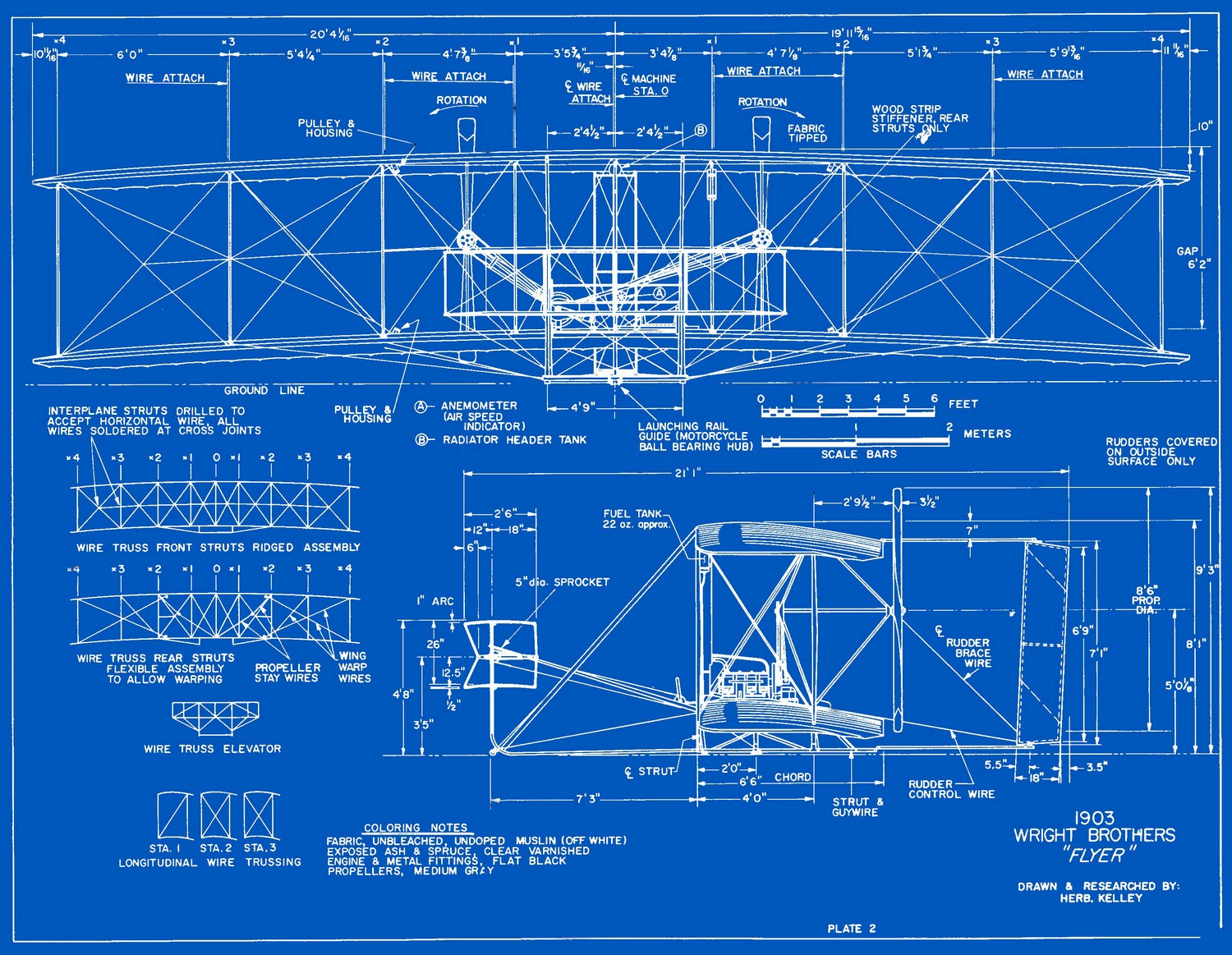
wrightbrothers.org
...he'd have been born with drive...
pedalpowerplanes.co.uk
...he'd have been born annoyed with the notion of the impossible...
upload.wikimedia.org
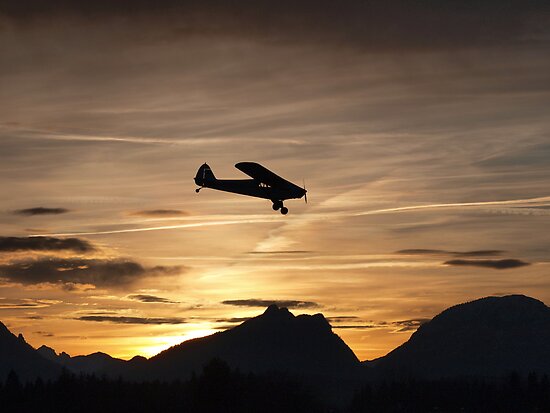
...and he'd have been born with dreams.
redbubble.net

Monday, September 23, 2013

How it went

The day was almost standard. If anything, it was perhaps too low-pressure. The pressure at the surface of Renton Municipal Airport, 32 feet above sea level, was 29.60 inHg, rather than the standard 29.92 inHg.

Breakfast was eggs-in-the-nest with Dave's Killer Bread, a bunch of grapes, and a tall glass of 2% milk. I wasn't hungry enough to eat the banana.

Artist's rendition. The nest is actually buttered toast. Not pictured: bananas.
The temperature warmed from its initial standard conditions of 59ºF/15ºC to 73ºF/23ºC. Cruise performance would be midway between the center and right-hand columns of Cessna's cruise performance table in section 5 of the 172S Skyhawk's Pilot Information Manual. That's fine--I'd just be sipping a little less gas at 2500 RPM. And the checkride wasn't going to burn more than 15 gallons of the C172's 53 usable gallon capacity, anyway.

I had been looking forward to this day for two years. I had been ready in the fall of 2011, but mono, weather, a change of instructors, the school getting really popular, a determination to reach a normal BMI and never get fat again, and changing roles at work all took their toll on my training schedule. But now that that was all done, it was finally time to do what I could have done two years ago.

I got to the airport early to skim through the Private Pilot Oral Exam Guide one last time. Skimming through a book is free; the exam isn't.

The oral exam concluded around 2:15pm. I had skipped lunch on the strength of my breakfast, so I grabbed a Snickers. The 'E' in IMSAFE is Eat!

N639SP had just returned from her 100-hour inspection, trivializing the task of locating her maintenance logs. There were 7 crystal-clear quarts of fresh oil in the engine.

Both while climbing and while on final you could feel each of the day's variable wind's 5 knots shifting direction with the caprice of a bored dilettante. We never climbed above 2700 feet, so we had plenty of bumps from the terrain throughout the maneuvers. Because of the bumps, I increased my airspeed for slow flight and on final approach beyond what was necessary. There's being within PTS and there's being proud with your maneuvers, and I wasn't proud.


Anyway, I passed! This is my announcement! I am now a private pilot.

Here's where it happened.
I'm equal parts pleased with the accomplishment and frustrated that it happened two years later than it could have. I know that becoming-a-private-pilot-is-a-beginning-not-an-end, but it's a huge relief to have finished the end of the beginning, especially after such a delay.

I highly recommend aviation as a hobby for those with the means. Become a software developer, pay off your loans, build up your "oh *&@#$" money, and learn to fly.

Pro tip: don't get mono.1


1If you have to, kiss everyone in sight before starting your training. Stop being a baby about it and go contract a disease.2

2I'm kidding, of course...but only just. Seriously, don't get mono.

Monday, July 18, 2011

First solo cross-country debrief

190100Z, KRNT
Destination: KBVS via KPAE
Sky condition FEW at 4500, ceiling greater than 12,000. A beautiful day.
Cruising altitude: 2500 there, 3500 back.
Winds aloft calm and variable. Easiest WCA's ever.

I left work in time to meet my instructor Nyle as he was finishing up with his previous student's lesson. He reviewed my flight plan and endorsed me to fly. I had pre-flighted 639SP while he was finishing up with his student: 6 quarts of oil, gas tanks full to the brim, sumps as clear, blue, and avgas-smelly as ever, the drops from the sumps briefly appearing to bleach my thumbs where they touched via rapid drying.

It's a warm day, let's go for a hot start. It took a little extra cranking, but sure enough the engine started before I had a chance to try flooding the engine with the fuel pump. It's the Seattle area in the summertime, so everyone who's anyone who can fly an airplane based out of Renton is out there that day. The runup box has a single occupant when I reach it, leaving more than enough room for my own runup.

Traffic is the busiest I've seen at KRNT: after the runup, I'm third in line to take off from runway 34. Looks like I've got some time, might as well enter in the Paine VOR, the Skagit NDB and Seattle Approach. Then it's time to wait. And wait. I'm holding short at runway 34, and I probably waited for five minutes while other planes landed and performed touch and goes. No problem, it all counts on the Hobbs meter. The better to speed me towards my requisite 5 hours of solo cross-country time.

Finally it's my turn: Cessna 639SP, no delay, clear to take off Runway 34, make East Channel departure. My fingers have been poised over the landing light, strobes and mode-C transponder. Without delay, I snap them all on as I release the breaks and enter the runway. As I climb past pattern altitude past the East Channel I-90 bridge I note the time. I keep out of Seatac's keyhole-shaped bravo layer and turn towards the north end of Lake Washington. Don't need stinking headings for that. Not in calm but variable winds aloft and surface observations.

I request VFR flight following to Skagit while over Lake Washington. I dutifully enter my transponder code. Seattle approach soon hands me off to Seattle Center. I'm at 2500 feet and sauntering towards Paine Field's airspace at 110 KTAS. Getting closer. Closer. Closer. Where's my clearance? Closer. Paine's ceiling is 3100 feet. Closer. Time to turn right. 9SP, do I have clearance to enter Paine's airspace? No answer. Oh well. I circumnavigate the delta and note the time half way around. I was going to use the center of Paine Field as a waypoint, but this works too. Plus I get to log extra solo cross-country time. And it gives me time to think. What's my next heading going to be? Yeah, at this point I can just follow the GPS to Skagit, but I'd like to try to stick as close to my flight plan as possible. My first nav radio already tuned to Paine's VOR, I set the indicator for my KPAE - Port Susan heading (no wind, so my course matches my heading!). It takes a long time to get to my radial, but at last I'm there (and yes, the VOR properly reads FROM. Smart Alec).

**Edit: A friend of mine pointed out to me that if I'm on flight following with a squawk code, I should be clear to enter the airspace. I didn't know this at the time since on previous flights I'd received positive clearance to enter other airspaces.

Runway 10/28 is closed at Skagit, leaving runway 4/22. Surface observations suggest runway 22, and area traffic confirms this is the case. I overfly the runway, give friendly updates on my position to other planes and land. I take a few pictures on the ground to share later via Google+, text Nyle and call my Mom. Traffic has cleared out, so nothing slows my crosswind departure to the south from runway 22. I contact Whidbey Approach for flight following back to Renton.

Around Port Susan I'm handed back to Seattle Center. At 3500 feet I can just overfly Paine's airspace. I accidentally tune the wrong Seatac frequency. It's a little embarrassing, but I correct my radio and I'm back in business. When Seattle Approach hands me over to Renton they tell me to keep my squawk code but approve a frequency change to Renton's tower. Okay, whatever. I'd assume they'd have me squawk 1200, but I guess their way works too. Renton tower tells me to squawk VFR as I make my Factoria arrival. Told ya.

**Edit: Like the above correction, this may have been to signal I was clear to enter Renton's delta airspace. My foot is in my mouth a little bit right now, but you can believe me that with my knowledge at the time it made no sense.

I do a few Victory Laps in the Renton pattern. I hit the tail end of the air traffic as I enter the pattern and extend my first downwind for an inbound Piper Warrior on a long final for a straight-in. It's a fairly normal touch-and-go from there: flaps 10, 85 KIAS, 500 FPM descent, turn base way before 800' AGL because of the extended downwind, flaps 20, 75 KIAS, turn final, flaps 30, establish glide path, 65 KIAS, power idle when crossing the threshold, flare, hold it, hold it, hold it, gentle landing, flaps up, full throttle, add rudder, 55 KIAS, rotate, climb at Vy, 100', 200', 300', 40----BIRDS! BIRDS OVER THE RUNWAY! BIG FLOCK OF THEM!

So I turned left. I doubt the birds established 2-way communication with KRNT, but I wasn't going to be self-righteous about how that space over the runway was mine. I was going to turn left. I had little faith that the birds would obey right-of-way rules and break right and there was more space on that side. It's all about see-and-avoid. I'm now at 38.7 hours in my log book and I can't wait to finish. There's no finer hobby, if you can afford it (thanks, software industry!).

Tuesday, April 19, 2011

First Solo Debrief

KRNT, 190130Z
Winds Calm, runway 16 in use, standard left pattern at 1000’ AGL east of the runway.
Ceiling: 5500 BRK, 7000 OVC, scattered light rain
AIRMETs: Mountain obscuration, moderate icing. Freezing level 2000 feet. No factor, I’m just in the pattern today.
Informal PIREP reported hail on final in the previous flight, so I called the briefer for an updated VFR area briefing for Renton Municipal with a focus on convective activity. We’re OK.
Fuel nearly full, 6 quarts of oil in Rainier Flight Service’s Cessna 172S N639SP.

Preflight: Inop strobe and taxi lights. A recent tail touch has me paying special attention to the rudder. Control surfaces are still scratched, but the damage is minor and the bent metal guard doesn’t inhibit the rudder’s range of motion. The airplane has had recent troubles with the flaps deciding to stay down when rolling on the runway during touch-and-goes, so I’ll pay special attention to make sure they do what I tell them to do.

The first three laps are with my instructor. The plane had just returned from another flight, so I tried a hot start. Crank, crank, crank, nothing. I guess the engine’s cooled down. Temperature 11 C, dew point -1. I prime the engine with a 3-second rich mixture. Now I’ve flooded the thing. My first flooded engine. My instructor just had me crank, but I knew what he was doing from common sense and studying the 172’s POH at the barber shop on Saturday: He’s having me crank with a low mixture and full throttle to get the intake back into a combustible condition, then swapping the mixture and throttle controls once the engine catches for a normal 1000 RPM idling speed on the tach. Mixture out 1” to taxi. Break check.

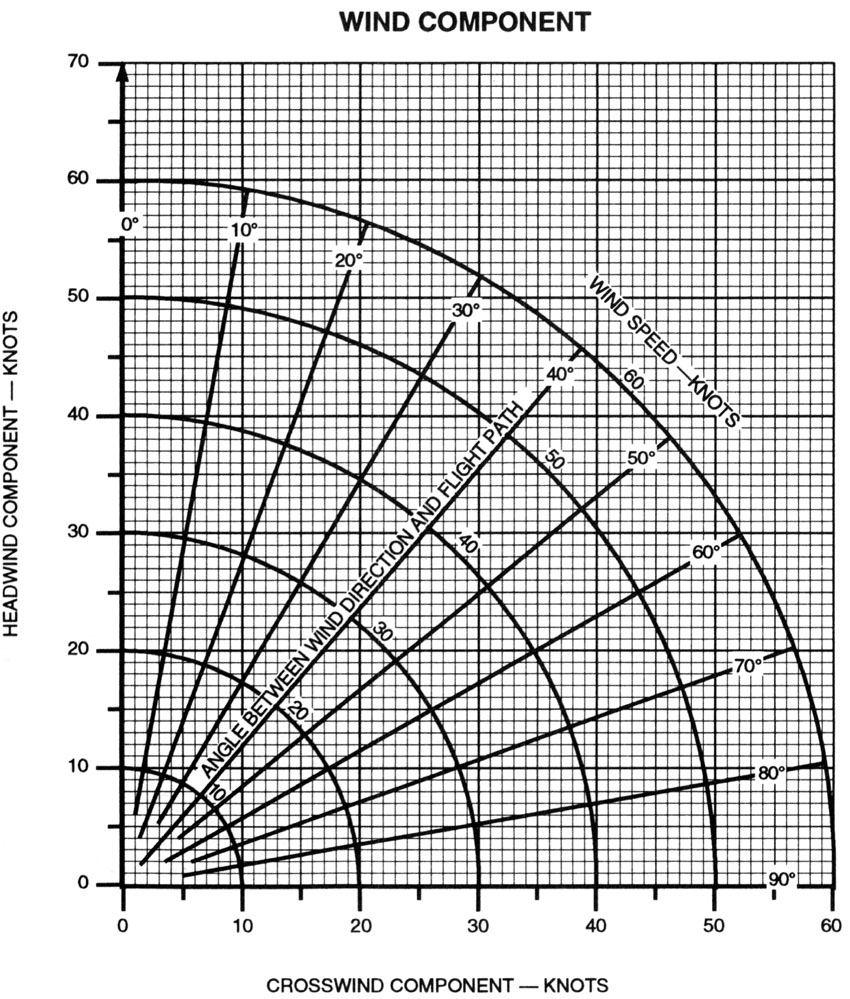
Altimeter 30.09. The wind has picked up and is now 190@4 KTS. 2 KT crosswind. 639SP requests taxi for close traffic with Papa. Cleared to taxi to runway 16 via Alpha. I goof a little on my turn up to the runup box and I’m almost in the taxiway for my mag/vac/alt check. Only the tower and my instructor are there for my goof. The engine is singing. Differential breaking with full right nosewheel and almost a half open throttle are needed to get my momentum going to taxi back to the taxiway centerline to hold short of runway 16.

We hold short for a 737 to land, then we’re cleared to take off. Throttle and right rudder come together in perfect harmony for a beautiful centerline ground roll. Airspeed stabilizes above 55 KIAS and I rotate, establishing Vy soon after. It’s perhaps my best takeoff. I do three laps with my instructor in the plane. Request stop-and-go, cleared. Once abeam my touch down point I bring the power back to 1500 rpm and prepare to lower the first 10 degrees of flaps. I turn base. The base and final turns at Renton are a little tricky since being straight over Lake Washington messes with your depth perception. I’ve overshot the centerline and need to line up. I’m a little fast and below glide path. Perfect—nose up and I’m back in business.

I have a natural bias to land flat. In my recent lessons I’ve started using a little power to counteract this, and I’ve gotten some wonderful landings out of it. It got addictive. It got the better of me. As we neared the approach end of runway 16, just off the shore of the lake, I was getting less and less happy with my approach. Time for a go-around. Full power, flaps 20, climb out, retracting flaps as appropriate.

To be sure I was nervous. Preparing for the solo I’d been rereading the Emergency Procedures section of the POH, reading AOPA articles about engine failure on climb-out and the “impossible turn,” thinking about what to do if I popped a main tire on touchdown or one of my brakes quit. It gets you a little nervous, thinking about all the ways your airplane might kill you before a solo.

Two more laps with the instructor. Once again I overshoot the runway centerline while turning final. I realize that I’m unconsciously pointing to the left as I start my landing procedure abeam the touchdown point, robbing me of valuable base leg length which I’d rather be using to establish 75 KIAS at a 500 fpm descent to get flaps down to 20 degrees. Back on centerline, I let myself land slightly flat. Stop-and-go.

Final lap with the instructor. This time I’ll beat that base leg. I stay just above the close edge of I-405 as I slow to 85 KIAS/500fpm descent/10 degrees flaps before making a crisp 30 degree standard-rate base turn. Without much hesitation, I turn final. Things are looking good. I fly a stabilized 65 KIAS centerline approach just below glide path, adding power to correct. I cross the threshold, close the throttle and flare…not as much as I could. I’m beginning to wonder what happened to those 20 wonderful landings I made last week. Nonetheless, my instructor thinks I’m ready. We taxi back to Rainier Flight Service and he endorses my log book for close-traffic solos. He adds a few of his personal minimums for students: 1500 foot ceiling, 8 miles visibility, maximum 8 KTS crosswind, prior permission required. The sun is going down, so he sends me out for two solo laps rather than the planned three. He calls the tower to let him know it’s my first solo, and the controller offers to stay late to assist, past the normal closing time of 8.

ATIS has switched to AWOS. Ceiling now 3000. Winds moving in. Engine start, lean the mixture 1” to taxi, run up (a much better runup turn), cleared to take off. I climb high, I climb fast. I defeat the base leg again and I’m on centerline. Tower calls the wind 060@8. Landing on Runway 16 means I’ve got just under an 8 KT crosswind. Too late now. Cleared touch-and-go. My left wheel touches first and I’m on the ground. I zig zag a little on the ground roll, turning more freely with less weight in the plane. Flaps up—yes, they went up. Back on the center line. Here I go again.

One last try. I got the centerline last time, now just add the right flare. My instructor wants the stall warning horn to go off a second before I touch down. Happy to oblige. I hold the aircraft off with the nose up as the mains caress the asphalt runway. My fourth landing and fifth approach of the night restore my belief that I was ready to solo tonight. I turn off at Foxtrot, thank the controller for staying a few minutes late and park the plane. Then I see it—for both of my solo landings, I left the mixture leaned out an inch rather than keeping it full rich. I have to laugh at myself. With all the bothering about flaps, transponders, landing lights, P-factor, tower communications, 30 degree banks, hugging 405 and flaring just right with the power cut, I forgot to enrich the mixture before requesting my takeoff clearance.

Live and learn. I’ve logged the first 20 minutes of the required 10 hours of solo flight required for my private pilot’s certificate. They’re the last .3 hours of my 19.2 hours logged to date. I look forward to completing this certificate, earning my instrument rating and building hours flying friends around and taking long trips to visit family in the Midwest, but for now I’m just enjoying the ride.