MathJax

Showing posts with label cyborgs. Show all posts

Monday, March 3, 2014

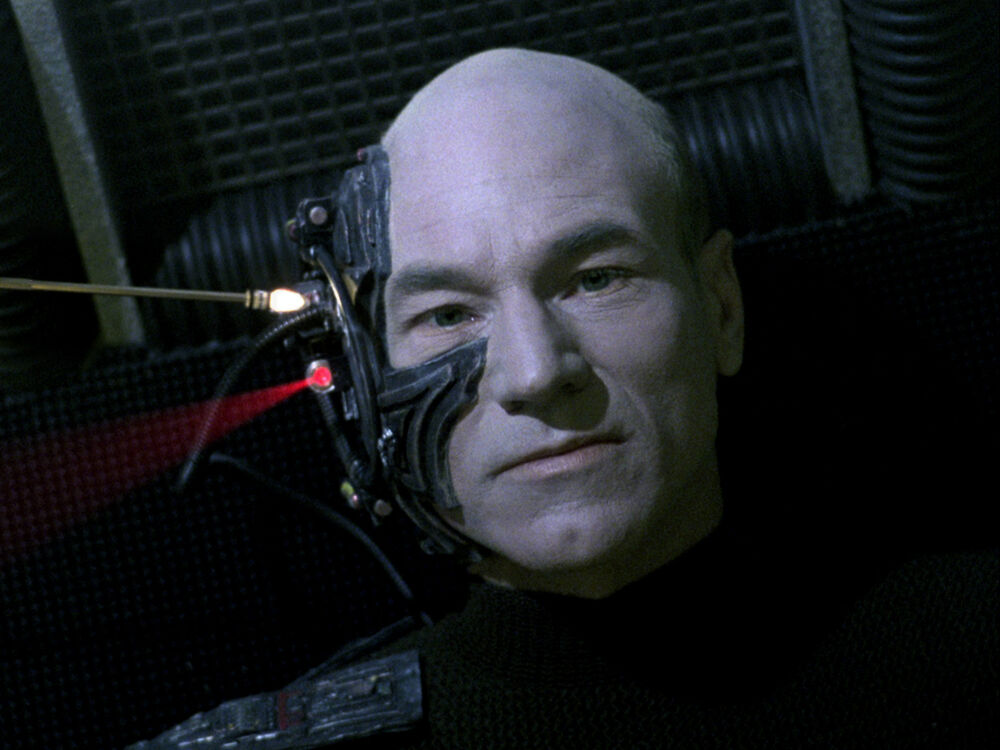
We're all cyborgs now.

Alfred North Whitehead once said "Society advances by extending the number of important operations which we can perform without thinking of them." This is the promise of our digital age, but not its guarantee.

Digital technology has simplified our lives in areas like paying bills, coordinating with friends, and getting around in new cities, but the wealth of information available to us can also overwhelm our puny carbon-based brains. The human memory is fragile, error-prone, slow to store and retrieve information, and limited in short-term storage (five to nine "chunks" of information). The first priority is to cope with this influx of information; the second is to bend it to your will.


You can meet the first priority by tuning out a lot of distractions1, but to thrive in the modern world, you must realize the meaning of this phrase: We're all cyborgs now. There's nothing special about our carbon brains that allows us to process this new influx of information; we have simply learned to make better use of the silicon extensions of those brains.


In much the same way that physical tools like levers, wedges, inclined planes, and pulleys allow people who understand them to apply their limited physical strength more effectively, logical tools allow people who understand them to apply their limited psychic strength2 more effectively.

Just like basic physical tools are combined into machines which are better- and worse-suited to the human body (axes, dollies, bicycles, airplanes, dental drills), iteration, symbolic manipulation, and conditional execution are combined into machines which are better- and worse-suited to the human mind (digital calendars and address books, search engines, note-taking software, spreadsheets, safe e-commerce, awful programmable VCRs from the 90s). Devices which remember for us, research for us, repeat for us, compute decisions based on our criteria, and communicate amongst themselves are now ubiquitous.


Just like a basic understanding of physics and physiology can make us much safer and effective when applying our physical strength, an understanding of the basic elements of computing and cognitive psychology make us clearer and more effective when applying our psychic strength. This argues for the importance of widespread education in computing, and even basic programming (very different from the traditional "computer courses" where elementary students learn to use Microsoft Word to print out essays) and raising the bar in terms of what we expect from ourselves when interacting with our technology.

What's the best way for a civilian aspiring-cyborg to learn these computing basics--the analog to basic physics in the mechanical world? I might not be the best person to ask about this, given that software is my bread-and-butter. My instinct is to point you at learning the basics of a programming language, probably JavaScript. It looks like this fellow might be in a familiar situation to yours, you non-programmers out there. His recommendation of the online version of Eloquent JavaScript, in particular, seem to be a perfect fit.

END COMMUNICATION


1Here are the worst offenders of information overload in our age, and what to do about them: Email, Facebook, Cell phones, and news sites/blogs (this one included).

  • Email: If you use Outlook for email at work, disable the desktop notifications. Companies that use Outlook tend to use Communicator as well. Don't turn email into a hacky instant messaging client. 
  • Facebook: Learn about Operant Conditioning, particularly the insidious nature of Intermittent Reward. Then walk away. 
  • Cell phones: If someone said, "I'll sell you a brick that buzzes and beeps every 53 minutes to distract you from what you're doing," you wouldn't be interested. That's not why we buy cell phones, so we shouldn't let them turn into productivity randomization bricks by accident. At home, keep it plugged in away from you. At work, keep it silenced, face-down and out of sight. This will also spare you the embarrassing experience of your phone turning into a meeting-interrupting brick.
  • Blogs: You're never going to read the entire internet. Use your social network as a sort of reverse-pyramid scheme to filter out the real gems, but even then know what you want to accomplish before you sit down to consume hypermedia.

2I don't believe in psychics, but I think that "psychic strength" is a cool phrase for describing brain power.


Monday, June 3, 2013

Post-boredom society

Seattle is a post-boredom world. 

It's a strange world. This is a greater challenge than TV. This is custom-fit entertainment. This is your personally tailored mix of entertainment, knowledge, news and attention. This is an infinity of distractions to keep you just above the threshold of boredom but far, far below any kind of fulfillment.

I call my smart phone my "portable contentment device." In my adult life, I've never been frustrated while waiting in line or at the airport. I haven't felt genuine boredom in a long time. I also haven't turned a stranger into a friend while waiting in line. I also don't spend nearly as much time as I once did deep in thought (not before I started regularly blogging, anyway). I don't think I'm alone in any of this.

Now, more than ever, it's important to develop hobbies, interests and friends to get satisfaction out of the way you spend your time. Being passive about your life will lead to it being lived for you. Cook a meal. Write. Read a classic. Make a video. Reflect. Take a time-out from your silicon brain. Best of all: go camping. Force yourself to get bored, and see what happens.


Tuesday, May 28, 2013

Speaking to software

Users of software! Who among you doesn't want this feeling?


A lot of effort goes into making software as simple as possible to use. Classics like Don't Make Me Think! catalog ways to make user interfaces intuitive. On the whole, this is a good thing. Competition in our choice of software is driving everything to be as simple as possible, and no simpler. But software can be more, much more. And not later: right now. The catch? You have to work for it. You have to learn your software's language.

Software is built of thoughts. What you see on a screen are images and words. What you hear are sounds: alerts, sometimes voices. What you feel are vibrations. These are all approximations of the logical world in which your software lives. You interact with this world by typing, clicking, tapping and speaking. Most of our typing, clicking, tapping and speaking is directed against objects presented to us by the user interface: pre-canned and pre-suggested actions. The user interface is a guide to the software's world of thoughts, helping you navigate your way to the solutions you seek.

What if you could interact with your software without a guide? What if you could describe your intent without having to navigate pre-trod logical paths? What if you could construct entire sentences for your software to interpret, beyond the limited vocabulary of "this thing" and "that action"? What if you could bypass the interpreter between your carbon and silicon brain and tell your computer what to do in a language it already speaks instead of trying to hunt for the way to prod the guide to suggest the action you already knew you wanted in the first place?

Think of Plato's Cave. The UI is just the shadows against the wall. Rather than limiting yourself to grasping at these shadows, with a lot of software there is an underlying language you can use to give direct orders. Think "keyboard shortcuts times one hundred."


Just past the covers, a lot of software that you already use has such languages. Excel has formulas. Outlook has rules. All of office has macro support. Your operating system has a command line and a shell you can use to help automate common tasks. If you build web pages, getting to know HTML, CSS and maybe even a little JavaScript will give you much more freedom than what you can experience from within a graphical editor.


Some software is built to be used primarily through its language. If you edit a lot of text for work, you might be familiar with the great vi or emacs. For the price of learning a small grammar and simple vocabulary for text manipulation, you can multiply your productivity at the keyboard.

But this is all on you. Nobody is going to make you think. A world of riches and reclaimed productivity is waiting for you if you can speak to the software you use day-to-day in its native language, not just through a graphical interpreter. Learning the language of a piece of software has the same thrills as learning a foreign language: pride in being able to guide yourself around a new country and the fun of figuring out how to most effectively curse.

This is why software developers should study foreign languages. Studying languages is the study of expressing thoughts, and we are a business of constructing goods made of thoughts. The best software and services enable us to do more than we could by translating our intent into action. The more we can express, the more efficient this communication becomes. In a way, we're all cyborgs now. We can either passively consume via our silicon brains, or we can use them to bend the world to our will.